

Key Takeaways
At Centre Wellness, we often hear individuals feel different during the winter, including maybe more tired, a little heavier emotionally, or less motivated. These changes are completely understandable. Winter in Canada brings shorter days, colder weather, and a natural slowing down. Your body and mind may need a different kind of care right now, and that’s okay.
- Canadian winters can bring changes to your mood, energy, and sleep.
- Feeling “off” during winter is common and valid, and you’re not alone.
- Small daily habits can make a big difference in how you feel.
- Therapy can offer gentle, personalized support through the colder months.
Table of Contents
- Why Winter Can Feel Different
- How Winter Might Affect Your Body and Mood
- Ways to Care for Your Mental Health in Winter
- Winter as a Time for Inner Renewal
- How Therapy Can Help You Feel More Balanced
- Frequently Asked Questions
- References
Why Winter Can Feel Different
When there’s less daylight and more time indoors, it can be normal for routines, energy levels, and emotions to shift. This doesn’t mean something is wrong, rather, it can mean that your body and nervous system are responding to the winter season. You might feel more sensitive or low in energy. Or maybe your motivation has dipped, even for things you normally enjoy. These experiences are often common during Canadian winters and can be supported with small, kind adjustments to your routine.
How Winter Might Affect Your Body and Mood
Here are some gentle changes that may show up for you during winter:
- Feeling more tired than usual, even after sleeping
- Craving more comfort food
- Wanting to stay in more often or feeling less social
- Feeling a bit down or unmotivated without knowing why
These shifts are often linked to changes in sunlight, movement, and routine (National Institute of Mental Health, 2022). It is not necessarily cause for alarm, but rather, a reminder that you may need a softer, more supportive rhythm.
Ways to Care for Your Mental Health in Winter
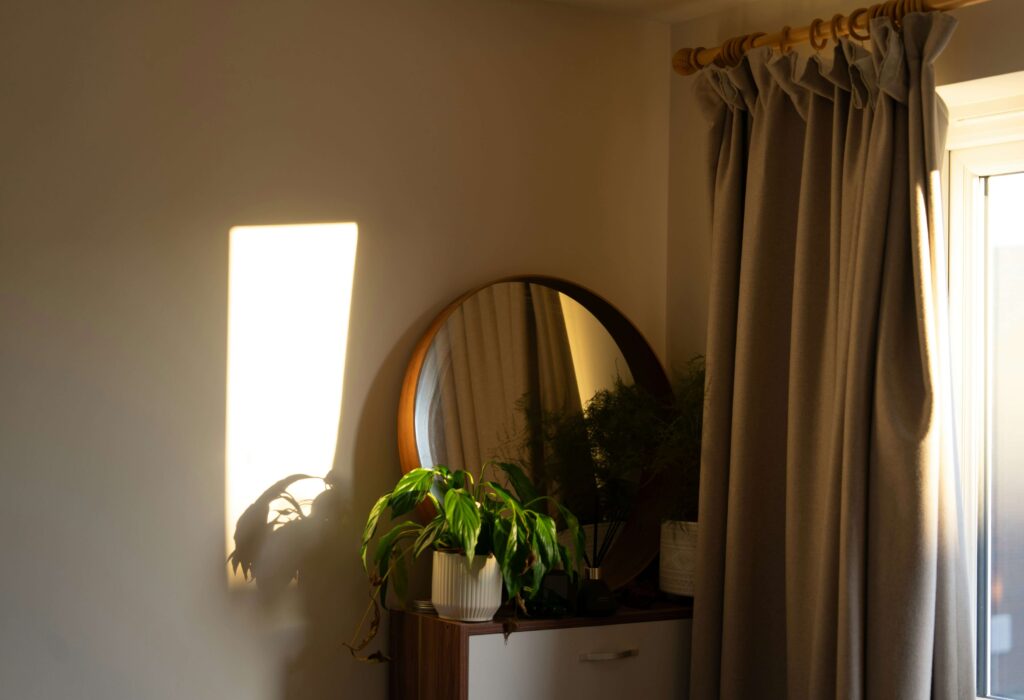
Light can be a simple yet powerful support for your mood.
Supporting your mental health during winter doesn’t have to be complicated. Here are some light practices to try:
- Let the light in: Open your blinds early and sit near a window when you can. Try getting outside for even 10 minutes a day when the sun is up.
- Keep a loose routine: Waking up and eating around the same time each day helps your body feel more stable.
- Move your body kindly: Gentle stretches, yoga, or a short walk can help shake off sluggishness and support your mood.
- Make space to feel: Journaling, deep breathing, or naming how you feel out loud can be grounding and validating.
- Stay connected: Even one kind conversation a day that is in person, by phone, or online can shift your emotional state.
- Do small things that feel like you: Light a candle, cook something nourishing, listen to your favourite playlist. These tiny actions reconnect you to yourself.
You don’t need to do all of these at once. Choose what feels supportive and try a little at a time.
Winter as a Time for Inner Renewal
There is something quietly beautiful about winter. It invites us to slow down, turn inward, and tend to what really matters. Without the pressure to be constantly “doing,” you may find space to reflect, heal, and reconnect with your values.
Winter doesn’t have to be a season you just get through. With the right kind of care, it can become a time of soft renewal and one that makes space for rest, emotional check-ins, and gentle growth.
How Therapy Can Help You Feel More Balanced
If winter feels heavy or out of balance, you’re not alone and you don’t have to navigate it on your own.
Therapy can help you explore how the season is affecting you personally. You and your therapist can work together to build emotional tools, gently shift patterns, and create a rhythm that supports your wellness in winter.
At Centre Wellness, we offer in-person and virtual therapy in Kingston and across Ontario. We’re here to support your emotional well-being in a way that feels compassionate, personalized, and empowering.
FAQs About Winter Mental Health in Canada
Q: Is it normal to feel off during winter?
A: Yes, it’s very common. Many people feel more tired, low, or less motivated in winter. These shifts are natural responses to environmental changes.
Q: Can small daily habits really help?
A: Absolutely. Gentle structure, light, movement, and emotional care can all support mood and energy levels over time.
Q: Do I need therapy if I’m just feeling a little low?
A: You don’t need to be in crisis to benefit from therapy. A few sessions can offer support, clarity, and tools that make a big difference.
Q: Is light therapy helpful?
A: Some people find light therapy useful in winter. It’s best to talk to a professional about whether it’s right for you.
References
National Institute of Mental Health. (2022). Seasonal Affective Disorder. https://www.nimh.nih.gov/health/publications/seasonal-affective-disorder
At Centre Wellness, our team develops blog content, and we sometimes use AI tools to assist in content creation. All content is directed, reviewed, and edited by our professional team to ensure accuracy and relevance to your needs. Please note that this blog is not a substitute for therapy or mental health treatment. We offer compassionate, evidence-informed therapy in Kingston and across Ontario.
At Centre Wellness, we sometimes use AI tools to assist in content creation. All content is directed, reviewed, and edited by our professional team to ensure accuracy and relevance to your needs.

